Mining for the Golden Nugget


Bruce Weindruch is one of the pioneers of corporate history communication in the United States. As founder of History Factory, he has spent nearly five decades helping organizations turn their history into a strategic asset. His work has shaped the way companies use heritage to strengthen identity, reputation, employee engagement, and business performance. In this interview, he reflects on the origins of History Factory, the evolution of the field, and the power of what he calls the “golden nugget” - the historical insight that connects an organization's past with its present and future.
Nearly 50 years ago, in 1979, you founded History Factory. What were the early days like?
Bruce Weindruch: We were academics rather than businesspeople, and that was probably an advantage. In the middle of a difficult economy, a few companies approached us with a practical problem: they had historical records, photographs, and artifacts that nobody knew what to do with. We helped them organize and preserve those materials. Looking back, those first collections became the corporate archives that formed the foundation of History Factory.
When did you realize that history could become more than an archival function?
BW: That realization came a few years later. Companies stopped asking us simply to preserve materials. Instead, they wanted to know whether their history could help them address contemporary issues. That was a turning point because we understood that history had strategic value, not just archival value.
Why was the publication of 'In Search of Excellence' such an important moment?
BW: Almost overnight, communications professionals from several clients called us with the same request. Their CEOs had read In Search of Excellence [Tom Peters, Robert H. Waterman Jr.: In Search of Excellence. Lessons from America’s Best-Run Companies, 1982] and wanted examples of excellence from their own organizations. We suddenly saw that companies were searching their past to support present-day business messages. That insight fundamentally shaped our approach for the decades that followed.
History Factory was founded during an economic downturn. Has that influenced the way you innovate?
BW: Absolutely. Many of our most important innovations emerged during difficult economic periods. When business slows down, you gain the opportunity to experiment, rethink your methods, and develop new approaches. When companies emerge from a downturn, they often need a renewed narrative about who they are and where they are going. We try to be ready for that moment.
You often speak about finding a “golden nugget.” What is a golden nugget?
BW: A golden nugget is an authentic historical insight that connects a company's heritage with a current strategic objective. It is not just an interesting fact. It is a discovery that helps explain who the organization is today and why that story matters to employees, customers, or other stakeholders.
Can you share an example?
BW: One of my favorites involves the merger of Fleet and Norstar, two American banks. While researching their histories, we discovered that the founders of the two institutions had actually worked together nearly 200 years earlier. One had apprenticed under the other before founding his own bank. Suddenly, the merger was no longer just a financial transaction. It became a story of two organizations with shared roots coming back together after almost two centuries. When we presented the discovery, the CEO immediately recognized its significance. That was a true golden nugget.
How do you go about finding such discoveries?
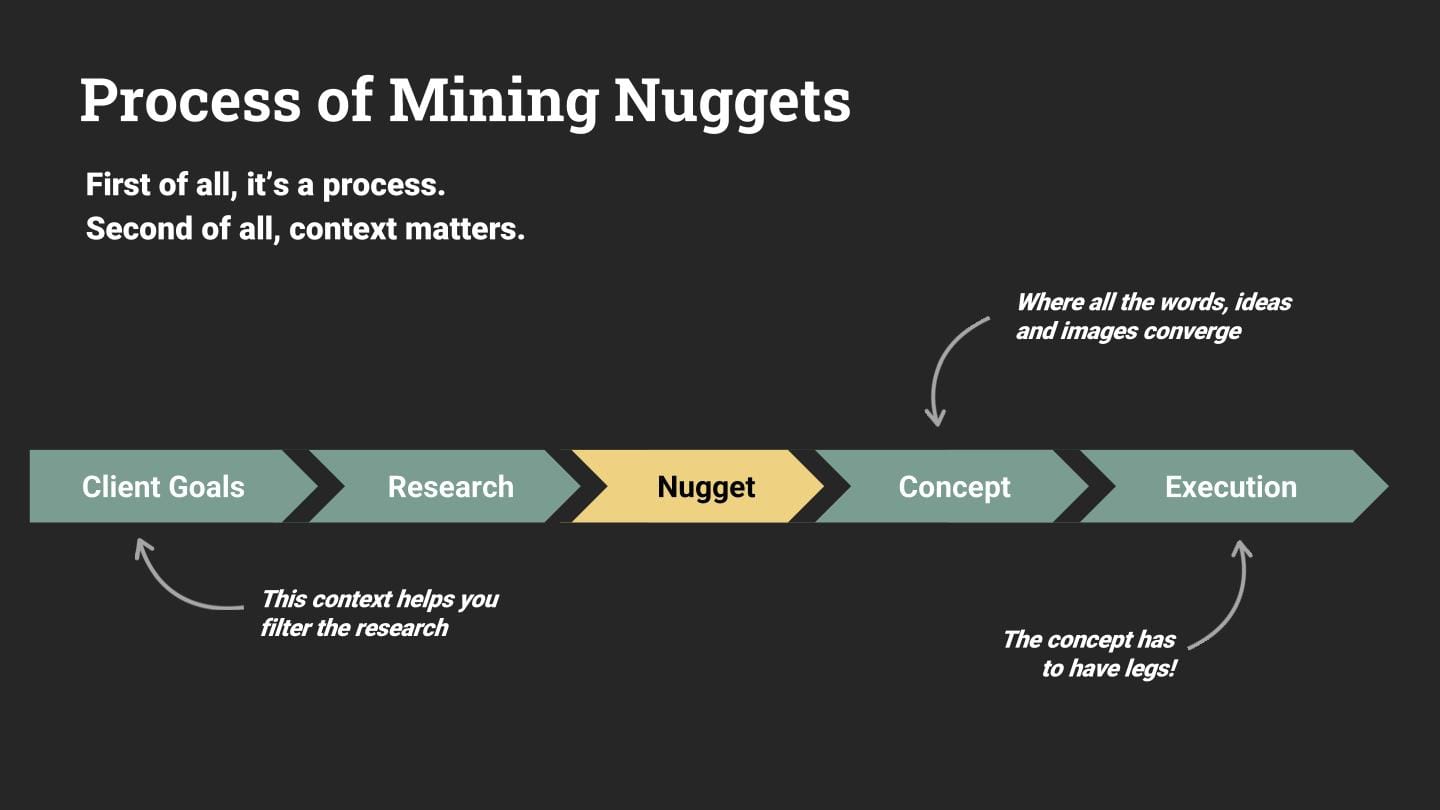
BW: The most important starting point is context. First, you need to understand the organization's goals and challenges. Then you conduct the historical research. The golden nugget often emerges where the organization's past and present intersect. Once you've found it, you can build concepts, narratives, and programs around it that create real value.
How does corporate history communication differ between Europe and the United States?
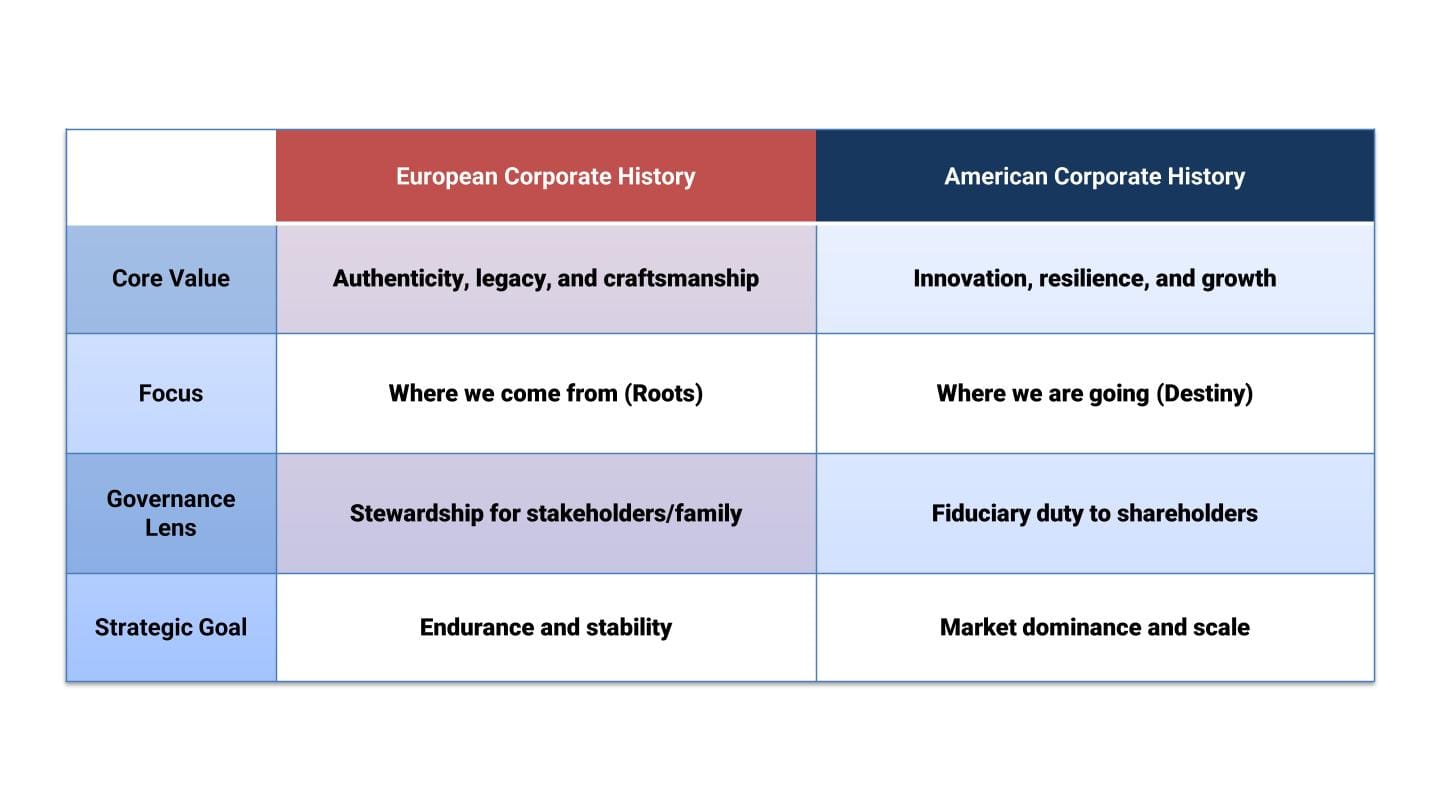
BW: These are broad generalizations, but there are noticeable differences. European companies often focus on heritage, craftsmanship, authenticity, and continuity. American organizations tend to emphasize innovation, growth, resilience, and future opportunities. Both approaches draw upon history, but they use it to tell somewhat different stories.
You often distinguish between “heritage brands” and “brand heritage.” What do you mean by that?
BW: A heritage brand is one whose history is inseparable from its identity. John Deere is a good example because its heritage is immediately recognizable and central to its brand. Brand heritage is slightly different. In this case, history supports the brand but does not define it. Caterpillar uses its history effectively yet usually communicates through themes of innovation and progress. The distinction is whether history is the brand itself or whether it serves as an important strategic asset.
A common question is whether history communication creates measurable value. What have you learned?
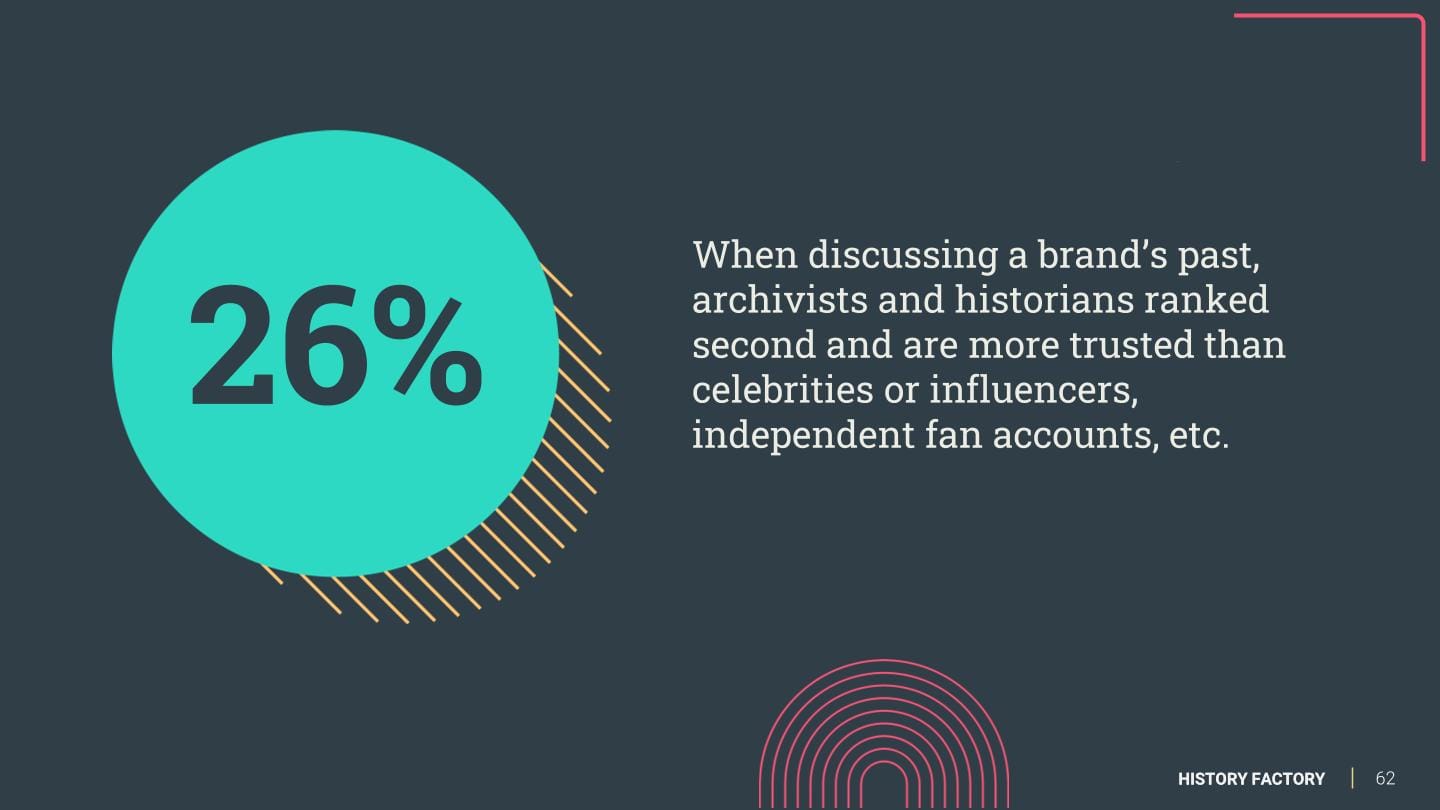
BW: We conducted research among American consumers and found remarkably positive attitudes toward corporate heritage. Most respondents expressed greater trust in companies with long histories. Many also reported stronger engagement with stories that connect past and present. Particularly interesting was the role of historians and archivists. They ranked among the most trusted voices when organizations communicate their heritage. That tells us that authenticity remains a powerful asset in an increasingly crowded communication environment.
Over the years, you have increasingly used the term “heritage” rather than “history.” Why?
BW: In the United States, some audiences associate history with looking backward. Heritage tends to be understood as something more active and valuable, a resource that can contribute to present-day decision-making. The terminology has evolved, but our underlying philosophy has not.
What has remained unchanged in that philosophy?
BW: From the beginning, we have believed that organizations should start with the future and work backward - a principle I later explored in more detail in my book “Start with the Future and Work Back. A Heritage Management Manifesto”. The purpose of history is not nostalgia. It is to rediscover the ideas, values, and ambitions that made an organization successful in the first place and to apply those insights to current challenges. When used well, history becomes a tool for shaping the future rather than preserving the past.
Thank you very much for the interview.
Dieses Interview basiert auf einem Vortrag von Bruce Weindruch, gehalten am 24.06.2026 im Rahmen des DPRG‑Arbeitskreistreffens History Communication.